A chimney inspection sorts into three levels defined by NFPA 211, the National Fire Protection Association standard for chimneys. A Level 1 inspection covers the readily accessible parts of the chimney and flue and…
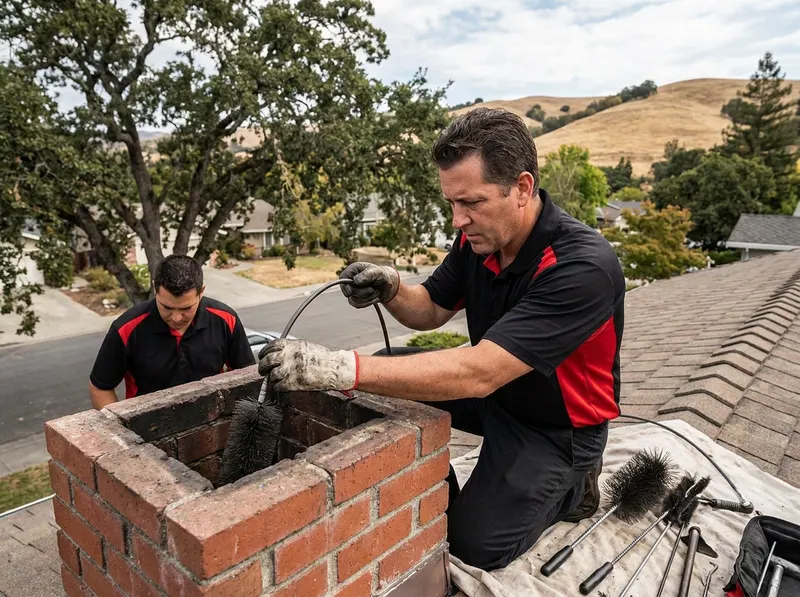
A chimney inspection sorts into three levels defined by NFPA 211, the National Fire Protection Association standard for chimneys. A Level 1 inspection covers the readily accessible parts of the chimney and flue and fits a home that has burned normally with no changes to the system. A level 2 chimney inspection is required when a home is being sold, after a chimney fire or earthquake, or when a fireplace insert or liner is added; it adds a video camera scan of the entire flue interior plus accessible attic, crawlspace, and roof areas. A Level 3 inspection involves removing brick or the chimney crown and is ordered only when a serious hidden hazard is suspected.
Most Walnut Creek homeowners need a Level 1 inspection for a routine seasonal check before lighting the first fire of fall. A level two inspection fits three situations: a pending home sale in neighborhoods like Rossmoor, Parkmead, or Walnut Heights where escrow disclosure matters; any chimney that backed up smoke or gave off a burnt smell; and homes near Mount Diablo State Park where a wood-stove insert was recently installed. The trade-off is straightforward: a Level 1 costs less and takes less time, while a Level 2 camera scan finds cracked flue tiles, gaps, and hidden creosote a visual-only check cannot reach.
Older masonry chimneys are common across Saranap, Rudgear Estates, and the ranch homes near Tice Valley and Indian Valley, where clay flue liners can crack from decades of heating and settling. A camera scan documents the liner condition tile by tile. Homes in Northgate, Woodlands, and Carriage Square with prefabricated metal fireplaces get a different check focused on the metal flue joints, chase cover, and cap. Creosote is graded in three degrees under CSIA guidance: Degree 1 is a light, sooty dusting that brushes off; Degree 2 is a flaky, tar-like layer; Degree 3 is a hard, glazed buildup that raises chimney-fire risk and requires specialized removal. The inspection report states which degree is present so the estimate reflects the real condition.
Every inspection ends with a written chimney cleaning estimate and, when repairs are found, a separate itemized chimney inspection and repair estimate. The on-site estimate is free, the inspector documents the findings, explains what each line means in plain language, and leaves the decision to the homeowner. Findings are photographed so a homeowner can see a cracked crown or a soot line before agreeing to any work.
How it works: 1) Call (925) 559-4974 to make an appointment and pick a two-hour window. 2) The inspector arrives, lays down drop cloths, and checks the exterior cap, crown, and flashing. 3) The firebox, damper, and smoke chamber are inspected from inside; a Level 2 adds the video flue scan. 4) You receive a written report and free estimate the same day.
Every job gets a firm, written price after a free on-site visit.
Tell us about your chimney inspection job in Walnut Creek and we'll send a clear, written quote, usually the same day.
 Blazeguard Chimney Sweep