A flue is the internal channel of the chimney; the liner is the clay tile, metal, or cast-in-place surface that protects the surrounding masonry and the house framing from heat and combustion gases. NFPA 211 requires…
A flue is the internal channel of the chimney; the liner is the clay tile, metal, or cast-in-place surface that protects the surrounding masonry and the house framing from heat and combustion gases. NFPA 211 requires an intact liner for a fireplace to be safe to burn, and the Chimney Safety Institute of America (CSIA) lists cracked or gapped liners as a leading cause of chimney fires because flames and creosote reach the brick and wood directly. In Walnut Creek's older housing stock, many Parkmead, Walnut Heights, and Saranap homes date to the 1940s, 1960s, original clay tile liners commonly show cracked joints from decades of heating cycles and from ground movement along the Tice Valley and Rudgear Estates hillsides.
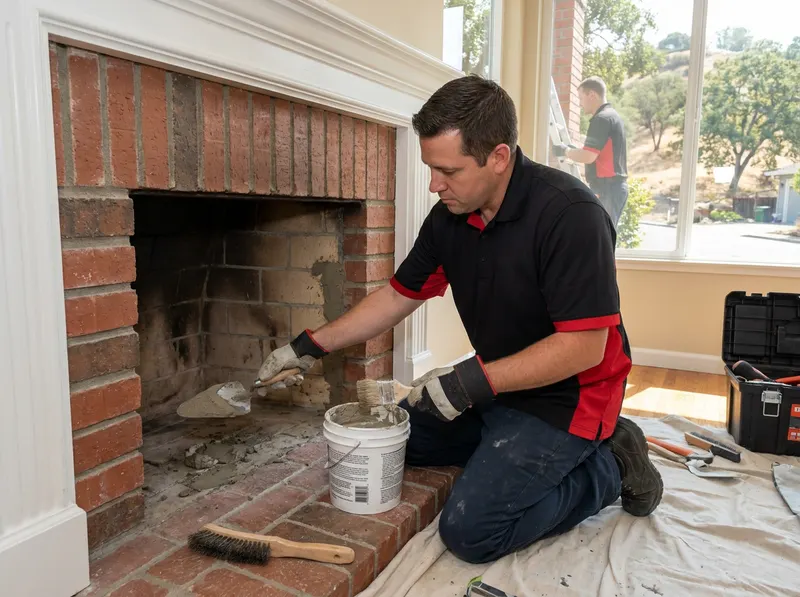
The repair path depends on what the camera finds. A single cracked mortar joint or a small gap is sealed with a high-temperature refractory compound, the lowest-cost fix. Multiple cracked tiles, a shifted flue, or a liner missing sections calls for chimney relining: a continuous stainless-steel liner (rated to roughly 2,100°F) is lowered the full height of the chimney and connected top and bottom, restoring a smooth, sealed passage. A homeowner who says "i got my flue clogged" often has a soot-and-debris blockage rather than structural damage, that is resolved by flue cleaning, and repair is only needed if the scan then reveals a cracked liner underneath. A separate case is the request to "seal off flue" entirely: when a fireplace is decommissioned or an appliance is removed, the flue is permanently capped at the top with a sealed chase cap and closed at the bottom so no air, moisture, or animals travel the shaft.
Decision fit is straightforward. If the fireplace still burns and the liner shows one or two isolated cracks, sealing the joints keeps the existing liner in service. If the liner has widespread cracking, spalled tile, or the wrong diameter for a newly installed gas or wood insert, relining with stainless steel is the durable choice, it also brings the flue into compliance for a Contra Costa County home sale, where inspectors frequently flag unlined or damaged flues. If the fireplace will never be used again, common in Rossmoor units converting to sealed gas or electric heat, sealing off the flue at both ends is cheaper than relining and stops the persistent cold-air draft and burnt smell reported in Northgate and Woodlands homes with open, unused flues. The trade-off: a seal-off is permanent, so a homeowner who might want a working fireplace later should reline instead.
Common edge cases: a flue too short or offset for a standard liner may need a flexible stainless liner and extra labor; a chimney shared between two flues (seen in some Indian Valley and Carriage Square duplexes) requires each flue evaluated separately; and any repair on a heating-appliance flue must match the appliance's venting category, not just the fireplace. Every flue repair here begins with a Level 1 or Level 2 inspection so the finding, and the price, rests on what the camera actually shows, not a guess. A free on-site estimate is available before any work is scheduled.
Every job gets a firm, written price after a free on-site visit.
Tell us about your flue repair & sealing job in Walnut Creek and we'll send a clear, written quote, usually the same day.
 Blazeguard Chimney Sweep